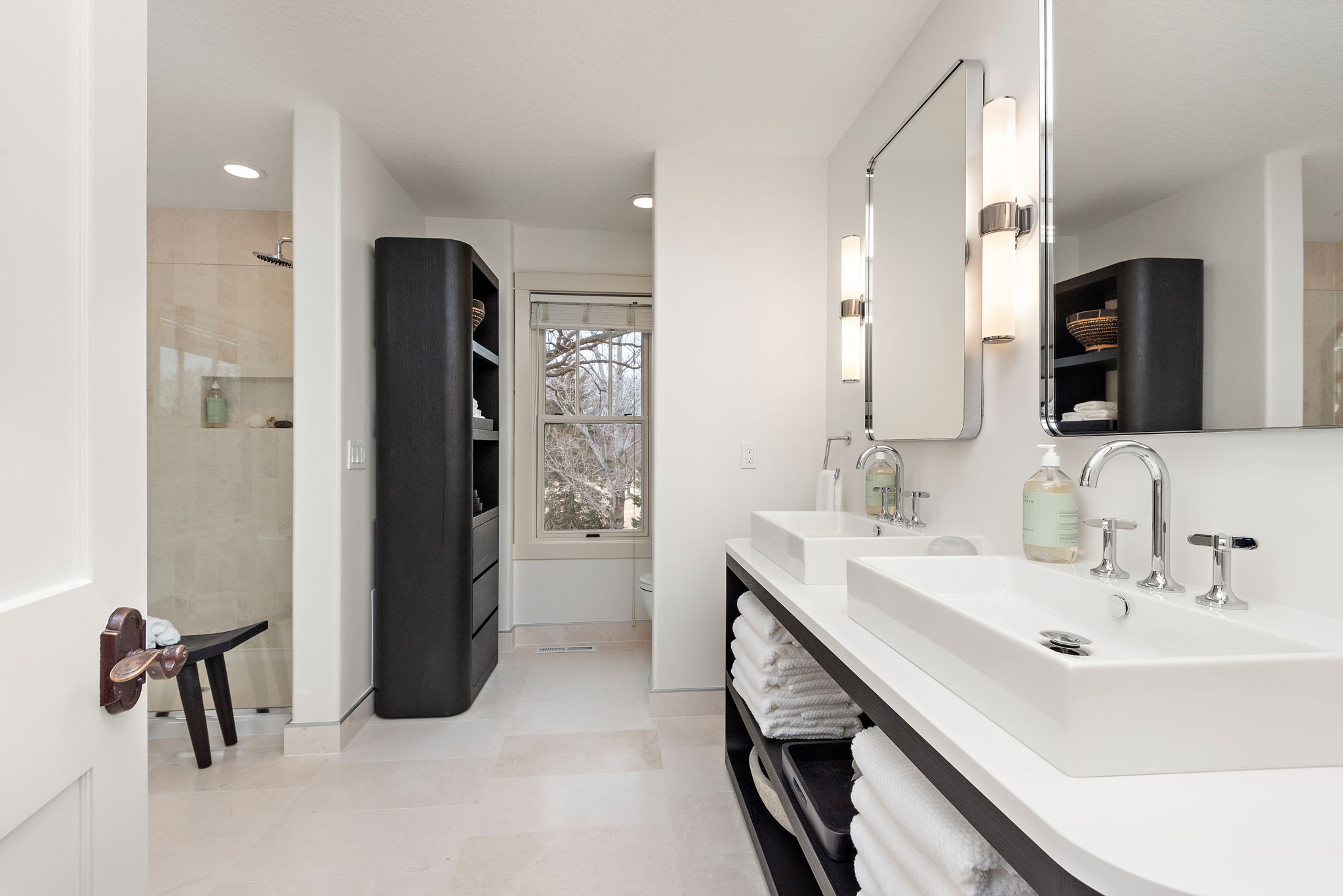

One of the biggest misconceptions about remodeling is that the cost is just materials and a little labor. In reality, there are many moving parts that go into building a space the right way. Skilled trades, permits, project management, finishes, layout changes, and unexpected issues all play a role in the final cost.
The truth is that remodeling costs vary widely depending on the size of the project, the layout, and the level of finishes you choose.
For example:
- A small galley-style kitchen remodel may start around $55,000
- A larger high-end kitchen renovation can exceed $195,000
Bathrooms can range from $27,000 for a small remodel to over $100,000 for a fully custom, magazine-style bathroom with high-end finishes.
Basements follow a similar pattern. A smaller basement finish may start around $65,000, while larger, fully finished basements can go well beyond $165,000.
When you start combining multiple projects—such as kitchens, bathrooms, and basements—a whole home renovation can range anywhere from $150,000 to $500,000, and in some cases easily exceed $1,000,000 depending on the scope and finishes.
Understanding where your money goes helps make these numbers make sense.
Where the Budget Actually Goes
Skilled Labor (30–40%)
A large portion of any remodeling project goes toward skilled labor—and for good reason. Experienced professionals ensure the job is done correctly and safely.
This includes:
- Demolition
- Carpentry
- Cabinet installation
- Tile work
- Finish work
Some finishes require far more labor than others. Highly detailed tile layouts, Venetian plaster ceilings, or complex stonework can significantly increase this percentage because of the craftsmanship involved.
Cabinetry and Millwork (20–30%)
Cabinetry is usually the largest material cost in a renovation, especially in kitchens and bathrooms.
This category includes:
- Kitchen cabinets
- Vanities
- Interior doors
- Trim and molding
- Hardware
Many cabinet shops charge around $75 per lineal inch for custom cabinetry, which adds up quickly depending on the size of the space.
Plumbing and Electrical (15–20%)
Modern homes need modern systems. In many remodels, electrical and plumbing need to be updated to meet current building codes.
For example, during a recent kitchen renovation in Eden Prairie, Minnesota, we had to run new electrical lines to bring the kitchen up to code for the stove and appliances. Afterward, drywall repairs were needed throughout the space. Situations like this are common and can increase the cost of a project.
Tile and Flooring (10–20%)
Flooring costs vary greatly depending on the material and installation complexity.
For example:
- A large floating plank floor can be installed fairly quickly and affordably.
- Detailed tile work—like penny tile or intricate patterns—can dramatically increase labor costs.
Small tiles require far more precision and installation time, which drives up the overall price.
Fixtures and Appliances (5–15%)
Fixtures and appliances are another category that adds up quickly.
This includes:
- Sinks
- Faucets
- Lighting
- Plumbing fixtures
- Appliances
Many homeowners choose to purchase appliances as a matching set so the design feels cohesive throughout the space.
Permits, Insurance, Overhead & Warranty (10–20%)
A properly run construction company must account for the things that protect both the homeowner and the project.
This includes:
- Building permits
- Dumpsters and debris removal
- Insurance
- Business overhead
- Warranty coverage
These are essential for making sure your contractor can stand behind their work long after the project is complete.
.png)
The Biggest Factor: Your Level of Finish
One of the fastest ways to control your renovation budget is deciding what level of finish you want.
For example, cabinetry alone can make a kitchen jump from $15,000 to $50,000 depending on whether you choose builder-grade cabinets or fully custom designs.
Small items also add up quickly during a full renovation:
- Outlets
- Switches
- Trim
- Hardware
- Fixtures
Together, these details can add another 10–15% to a project.
Larger materials can vary dramatically as well. In Maple Grove, Minnesota, we recently priced a countertop for a medium-sized kitchen:
- Hanex solid surface countertop: about $12,000
- Quartzite imported from Brazil: over $29,500
Both are beautiful—but they come with very different price tags.
Layout Changes Can Increase Costs
Another major cost driver is changing the layout of a space.
Keeping the existing layout is usually the most cost-effective option. However, many homeowners want an open-concept design, which often means moving walls.
In a whole-home remodel we completed in Long Lake, Minnesota, we removed a load-bearing wall to combine the kitchen and living room. While the results were incredible, it required structural work and relocating multiple trades.
Moving walls is expensive.
Moving plumbing and electrical is expensive.
But sometimes it's the right choice for creating the space you truly want.
Always Plan for Contingencies
Construction is not an exact science. Even with careful planning, hidden issues can appear once demolition begins.
We typically recommend setting aside 10–20% of the project budget for potential surprises, such as:
- Old wiring
- Plumbing issues
- Hidden water damage
- Improper framing
- Code-required upgrades
Having a contingency fund prevents stress if something unexpected is discovered.
Be Honest About Your Comfortable Budget
Before starting a renovation, ask yourself three simple questions:
- What do I want to spend?
- What will the project realistically cost?
- What am I comfortable spending?
We never encourage homeowners to stretch beyond their comfort zone. Renovation projects should improve your home and your life—not create financial stress.
A common guideline is to avoid spending more than one-third of your home's value on renovations.
Should You Shop by Price Alone?
Choosing a contractor based only on the lowest bid is one of the most common mistakes homeowners make.
Lower bids often leave important things out, such as:
- Project management
- Warranty coverage
- Proper insurance
- Experienced trades
- Accurate scopes of work
We also see aggressive change orders later in the project, which can turn a low bid into the most expensive option in the end.
Our approach is simple: clear, honest pricing from the beginning, with as few surprises as possible.
What a Realistic Remodeling Budget Includes
A well-planned renovation budget accounts for:
- Insurance
- Skilled trades
- Project management
- Jobsite cleanup
- Warranty coverage
- Accountability
These are the things that ensure your project is completed correctly and stands the test of time.
Think Long-Term
When planning a renovation or addition, it helps to think beyond the immediate project.
Ask yourself:
- Do I want this space primarily for comfort and function?
- Am I improving resale value?
- Do I want lower maintenance materials?
- Should I invest in higher energy efficiency?
Sometimes spending a little more upfront can save money and headaches long-term.
Final Thoughts: Clarity Creates Confidence
The more clarity you have about costs before a renovation starts, the smoother the project will be.
For most projects, we begin with a pre-planning phase, typically around 10% of the estimated project cost. During this phase, we select and plan:
- Fixtures
- Countertops
- Cabinets
- Appliances
- Materials and finishes
This level of planning dramatically reduces surprise change orders later and helps keep projects on schedule and on budget.
Custom materials—especially cabinets and appliances—can affect timelines. Planning them early ensures everything arrives when it’s needed.
Most importantly, it reduces stress for homeowners and allows us to focus on what matters most: delivering a finished space with excellence in every detail.
.png)

%20(250%20x%20100%20px).png)
